


By Lauren DePoe, REALTOR® · Published October 23, 2026
Short answer: Yes, most Sedona homes can be insured, but wildfire exposure has made coverage less predictable than it used to be. Some owners see higher premiums, stricter underwriting or a non-renewal notice, and Arizona has no state-run FAIR plan to fall back on. If standard carriers decline a home, the usual alternative is the surplus lines market, which tends to cost more and cover less. For buyers, the practical rule is simple: get real insurance quotes during your inspection period, before you are committed to the purchase.
Why is homeowners insurance harder to get in Sedona?
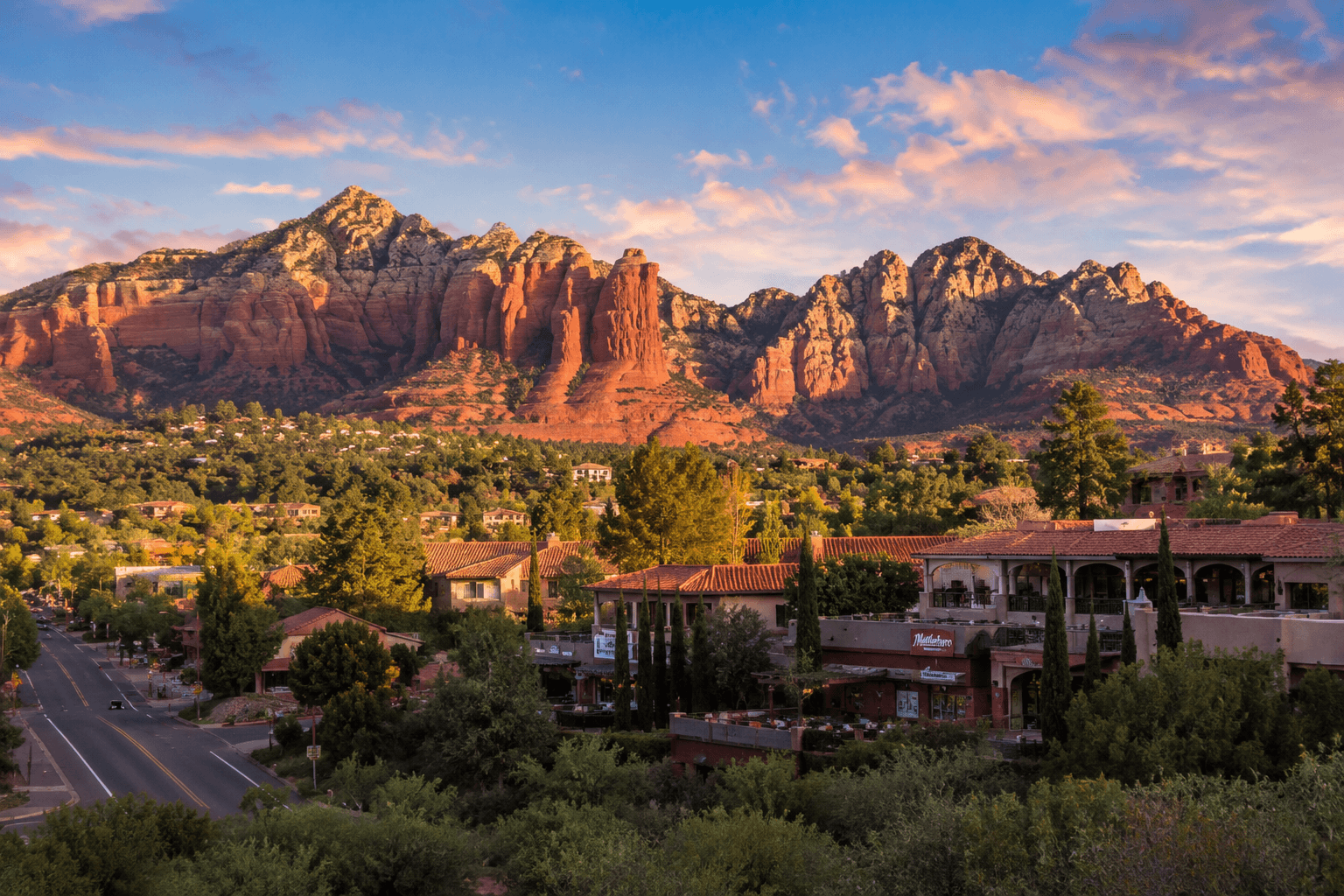
Much of Sedona sits in the wildland-urban interface, where homes meet juniper, pinyon and pine and back up to the Coconino National Forest. Insurers have been looking more closely at that exposure across Arizona. A University of Arizona Cooperative Extension study published in October 2025 found Arizona’s statewide non-renewal rate was 0.8% in 2023, lower than California’s or Florida’s, but some Arizona counties reached 4.8% in a single year. The study also points to rising property values and construction costs as reasons premiums have climbed.
The issue has the state’s attention. Arizona’s Department of Insurance and Financial Institutions (DIFI) formed a Resiliency and Mitigation Council to study how wildfire affects access to homeowners insurance, and in April 2026 an Arizona Corporation Commission town hall focused on wildfire mitigation and insurance non-renewals, with Sedona and the rest of Yavapai County among the communities discussed.
What affects the cost of insuring a Sedona home?
Each insurer uses its own model, but these factors tend to carry the most weight here:
- Wildfire exposure. Vegetation, slope and how close the home is to open forest land.
- Construction. Roof type and age, exterior materials, decks and vents.
- Defensible space. How well the area immediately around the home is cleared and maintained.
- Fire protection. Distance to a fire station and hydrant access.
- Rebuilding cost. Replacement cost rises with size, finishes and custom features.
- Claims history. Prior claims on the property or by the owner can affect eligibility and price.
- Use. A primary residence, a second home that sits empty part of the year and a short-term rental are often underwritten differently. My post on short-term rental rules for Sedona-area buyers covers the use questions to settle first.
Two similar homes in the same neighborhood can receive very different quotes, so a neighbor’s premium is not a reliable guide.
What should I do about insurance when buying a Sedona home?
- Start early. Call an insurance agent as soon as you are serious about a home, not after you are under contract and close to closing.
- Get written quotes during the inspection period. That is when you still have room to decide. A lender will require coverage before closing, so a surprise late in escrow can delay or derail the purchase.
- Use an independent agent. An agent who represents several carriers, including surplus lines, can show you the range of options for a specific address.
- Ask about the property’s claims history. Your insurance agent can explain how prior claims could affect a quote.
- Compare coverage, not just price. Check the wildfire coverage, deductibles, dwelling limit and any exclusions side by side.
- Build the premium into your budget. Insurance, along with property taxes and HOA dues, is part of what the home really costs to own.
What if my Sedona homeowners policy is not renewed?
According to DIFI, insurers in Arizona must give at least 30 days’ notice of a non-renewal before the end of the policy period. Use that time well:
- Ask the insurer why. If the reason is something you can fix, such as roof condition or vegetation, ask whether correcting it would change the decision.
- Shop immediately. An independent agent can check other admitted carriers and the surplus lines market. Surplus lines policies are often more expensive, may carry higher deductibles and may limit some coverages, so read the wildfire terms closely.
- Document mitigation. Photos and records of clearing, roof work and ember-resistant upgrades give an underwriter something concrete to evaluate.
- Use the state’s resources. DIFI’s consumer pages explain your rights and how to file a complaint.
Does wildfire mitigation help with insurance?
It can, though no single step guarantees coverage or a discount. Some insurers recognize mitigation programs or give credit for specific upgrades, so ask each carrier what it counts. Common steps include keeping the first few feet around the home clear of anything that burns, maintaining vegetation farther out, keeping roofs and gutters clear, and using ember-resistant vents. Mitigation also matters to future buyers, who are asking more questions about insurability than they did a few years ago.
Frequently asked questions
Can you get homeowners insurance in Sedona, AZ?
Yes, most homes can be insured, but wildfire exposure means some properties face higher premiums, stricter underwriting or fewer carriers. Quotes vary widely by address.
Does Arizona have a FAIR plan for homeowners insurance?
No. Arizona does not have a state FAIR plan. If standard insurers decline a home, the usual alternative is a surplus lines policy placed through a licensed agent.
How much notice does an insurer have to give before not renewing a policy in Arizona?
According to the Arizona Department of Insurance and Financial Institutions, at least 30 days before the end of the policy period.
When should a buyer get insurance quotes on a Sedona home?
Before or during the inspection period, while you still have time to evaluate the cost and coverage before you are committed to the purchase.
Does wildfire mitigation lower insurance costs?
It can help. Some insurers give credit for mitigation or recognized programs, but practices vary by company, so ask each insurer what it considers.
Buying in Sedona with the full picture
If you are buying in Sedona, the Village of Oak Creek or the Verde Valley, I make insurance part of the conversation from the first showing, along with taxes, HOA rules and recent sales. Contact me or call 928-340-7773. You may also find things you shouldn’t do when buying a home and what it’s really like to live in Sedona helpful.
Sources
- University of Arizona Cooperative Extension, Wildfire & Homeowners’ Insurance Non-Renewals in Arizona (October 2025; accessed October 23, 2026)
- Arizona Department of Insurance and Financial Institutions, notice of cancellation or non-renewal (accessed October 23, 2026)
- Arizona House of Representatives, news release on the April 16, 2026 wildfire and insurance town hall (accessed October 23, 2026)
Lauren DePoe, REALTOR®, Coldwell Banker Realty, 195 W. State Route 89A, Sedona, AZ. I am not an insurance agent. This article is general information; consult a licensed insurance professional about coverage for a specific property.